
Your cart is currently empty!
How to Ride a Royal Enfield: The Complete Beginner’s Guide
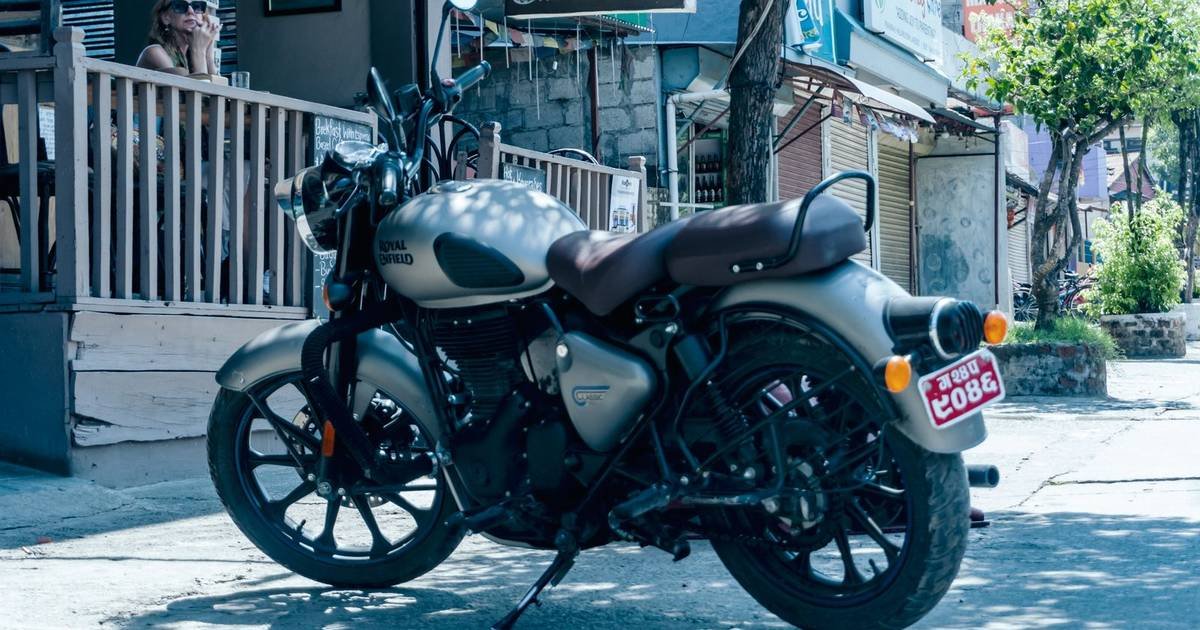
Royal enfield riding looks powerful, and that can feel scary when you have never ridden before. The good news is simple. Almost anyone can learn to ride a motorcycle with the right steps and calm support. This guide walks you through everything a first timer needs, from meeting your bike to your first supervised ride. At Enfield Riders we have trained more than 10,000 women since 2014, and around 70 percent had never even ridden a bicycle. So if you feel nervous, you are in very good company. Explore our Royal Enfield coaching programs as you read, and take this one step at a time.
Key Takeaways
- A Royal Enfield is a geared motorcycle, so learning the clutch friction zone is the core beginner skill.
- Structured coaching with small groups helps you learn faster and feel safer than practising alone.
- You do not need any past experience, most learners start from complete zero and build real confidence.
Why structured coaching beats learning alone
Many beginners try to learn from a friend or a family member in an empty parking lot. It feels free, but it often builds bad habits and real fear. A dropped bike or a scary near miss can stop a nervous learner for good. Structured coaching removes that risk and replaces it with calm, clear steps.
At Enfield Riders our coaches are trained to teach beginners, not just to ride themselves. That difference matters more than people expect. A great rider does not always know how to explain the clutch to a first timer. Our small group ratios keep you supported at every moment. The foundation course runs one coach to four learners, and the advanced course runs one to three. If you want full focus, the personalised course is one to one. You are never lost in a crowd.
This structure is why so many women trust us to learn to ride a motorcycle from complete zero. Around 70 percent of our learners had never ridden even a bicycle before joining. They still finished confident and safe. Our 1,230 excellent rider reviews come from people who once felt exactly like you do now. You can read some of their stories on our rider reviews page.
Coaching also gives you a safe practice space and the right bike setup from day one. You are not borrowing a heavy machine and hoping for the best. You learn on ground built for learning, with someone watching every move. That safety net lets you try, wobble, and improve without panic. Over two short days, small wins stack into real skill. Learning alone rarely gives you that steady, judgment free progress.
Getting to know your Royal Enfield motorcycle
Before you move an inch, you need to understand what you are sitting on. A Royal Enfield is a geared motorcycle, not a gearless scooter. That single fact shapes everything you will learn. A scooter uses simple twist and go. A geared bike asks you to work a clutch, gears, and throttle together. This feels like a lot at first, but it becomes natural with practice.
Start by learning the main parts without the engine running. Sit on the bike and feel its weight between your knees. Find the handlebar grips, the front brake lever on the right, and the clutch lever on the left. Look down and spot the gear lever near your left foot and the rear brake near your right foot. Knowing where each control lives builds quiet confidence before you ride.
You should also learn the basic checks that keep you safe. Coaches teach you to look at tyres, brakes, lights, and fuel before every ride. These small habits protect you for years. The Royal Enfield official website also shares model details if you want to explore your specific bike further.
Weight and balance surprise many first timers. A Royal Enfield sits heavier than a scooter, so you learn to hold it upright with your body, not just your arms. Our coaches show you how to rock the bike gently and find its natural balance point. This is a key part of royal enfield for beginners training. Once you respect the weight and understand the layout, the bike stops feeling like a mystery. It becomes a machine you control, step by step. That shift in mindset is where real riding begins, long before you leave the training ground.
Mastering the controls and the clutch friction zone
The clutch friction zone is the heart of learning any geared bike. It sounds technical, but the idea is simple. The clutch lever connects and disconnects the engine from the wheel. The friction zone is the small window where the clutch starts to grip and the bike wants to move forward. Master this, and bullet bike riding stops feeling scary.
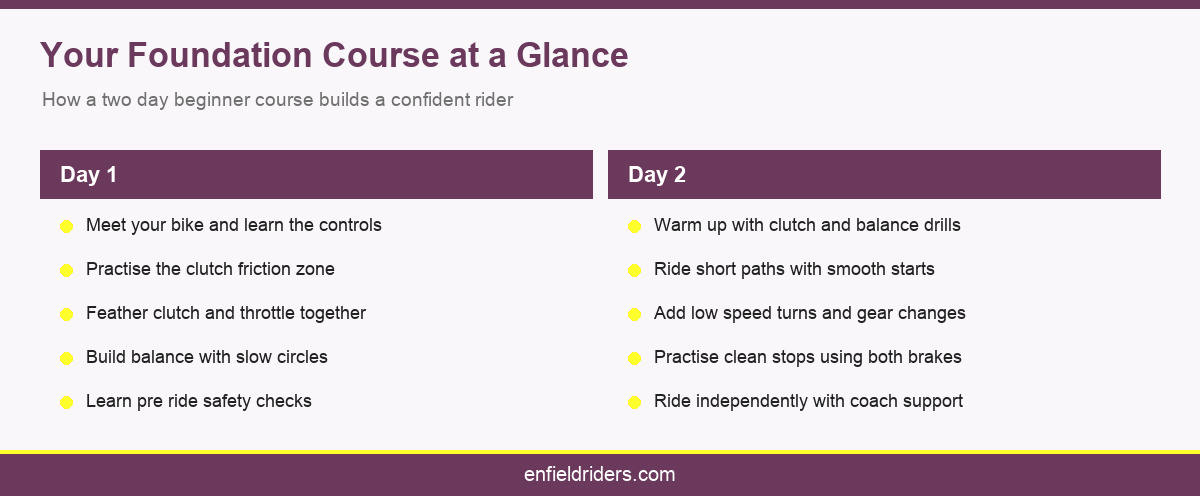
You will practise this with the bike stationary first. Squeeze the clutch fully, then release it slowly until you feel the bike gently pull. That gentle pull is the friction zone. Hold it there, then squeeze the clutch back in. Repeat this many times. Your left hand learns the feel through muscle memory, not through thinking. This slow, patient practice is exactly why coaching works so well.
Once the friction zone feels familiar, you add the throttle. A small, steady twist gives the engine power while you ease the clutch out. Too much throttle feels jumpy. Too little makes the bike stall. Finding this balance is the biggest beginner milestone. Our coaches guide your hands and voice until it clicks. You can see how our structured approach works across our coaching programs.
Do not rush this stage. Every rider you admire once stalled the bike many times learning this exact skill. Stalling is normal and harmless when you practise safely. The friction zone teaches smooth starts, slow control, and calm hill moves later on. It is the foundation of every skill that follows. When your left hand and right wrist finally work together, you feel a real spark of pride. That moment is where many nervous learners realise they truly can learn motorcycle riding after all.
Balance and low speed control for beginners
New riders often think speed is the hard part. In truth, low speed control is far more challenging and far more useful. Slow turns, tight spaces, and stopping smoothly all test your balance. This is where many beginners feel wobbly, and where good coaching truly shines. We build these skills gently, so you never feel out of control.
Balance starts with how you sit. Coaches teach you to look ahead, not down at the front wheel. Your body follows your eyes, so a steady gaze keeps the bike steady. You also learn to keep your knees lightly against the tank. This connects you to the machine and helps you feel its small movements. These quiet habits turn wobble into calm control.
At very slow speeds, the clutch friction zone becomes your best friend again. Feathering the clutch lets you creep forward smoothly without stalling or lurching. Gentle rear brake and steady eyes complete the picture. We practise slow circles, straight lines, and controlled stops until they feel natural. Small, safe repetition builds the balance that makes riding feel easy.
This low speed work is a core part of how we help women learn to ride a motorcycle with real confidence. Remember, around 70 percent of our learners had never ridden a bicycle, so balance was brand new to them. They still mastered it in a supportive, judgment free space. You will too. Once slow control feels comfortable, everything else becomes easier. Junctions, parking, and traffic all rely on these same low speed skills. Getting them right early makes you a safer, calmer rider for life. This patient foundation is what separates a confident rider from an anxious one.
Your first supervised ride step by step
Your first real ride is a big moment, and coaching makes it feel safe instead of frightening. You will not be thrown into traffic. Instead, you ride in a controlled training space with your coach close by. Every step builds on the clutch and balance work you have already practised. This is where the skills come together.
First, you settle onto the bike and run your safety checks. Then you find the friction zone and ease the bike into gentle motion. Your coach stays beside you, giving calm, clear guidance. You ride a short, straight path, then practise a smooth stop using both brakes gently. Starting and stopping cleanly is your first true win. You repeat it until it feels natural.
Next, you add simple turns and gear changes at low speed. You learn to look through the turn, ease the throttle, and stay relaxed. Each lap adds a little more skill and a little more calm. Our foundation course runs 12 hours across two days, so there is real time to practise. The advanced course adds 8 hours for riders ready to grow further. This unhurried pace is why our structured coaching programs work so well.
Throughout your first ride, your coach reads your comfort and adjusts the pace. If you feel nervous, you slow down and rebuild confidence. If you feel ready, you gently push a little further. This one to one attention within a small group keeps you safe and supported. By the end of your first supervised sessions, most learners are riding, turning, and stopping on their own. That quiet pride is unforgettable, and it is exactly what our 1,230 excellent reviews describe again and again.
Safety habits every new rider needs
Confidence and safety grow together, never apart. A safe rider is a calm rider, and calm riders learn faster. From your very first session, we build safety habits that protect you for a lifetime. These are simple, everyday actions, not complicated rules. Once they become automatic, riding feels far less stressful.
Start with your gear. A well fitted helmet is non negotiable, and proper clothing protects you in a fall. Coaches also teach the pre ride check we mentioned earlier. Looking at tyres, brakes, lights, and fuel takes under a minute and prevents many problems. These small routines are the mark of a serious, safe rider. They cost you nothing and protect everything.
On the move, safety is mostly about awareness and smooth control. You learn to look far ahead, keep space around you, and signal clearly. You practise gentle braking so you never grab the front brake in panic. You also learn to ride at a speed that matches your skill, not the traffic. Good road safety guidance from the Ministry of Road Transport supports everything we teach on the ground.
Safety also means riding legally. A valid licence protects you and everyone around you. You can learn about the licence process through the official Parivahan portal when you are ready. Building these habits early makes them permanent. They turn a nervous first timer into a steady, aware rider. This safety first mindset runs through all our coaching programs, because we want you riding happily for years. When safety feels natural, confidence follows on its own. That is the calm, capable rider we help you become.
Choosing the right coaching course and city
Picking the right course depends on where you are starting from and what you want. Enfield Riders offers three clear paths, so you never pay for skills you do not need. Each course is built around real beginner needs, with small groups and patient coaching. Understanding your options helps you start with confidence.
The foundation course is perfect for true beginners. It runs 12 hours across two days, with one coach for every four learners. This is where most women start, especially those who have never ridden anything before. The advanced course suits riders who already have basics and want to grow. It runs 8 hours across two days at a one to three ratio. If you want complete, focused attention, the personalised course is one to one, shaped fully around you.
Location matters too, because practising near home makes it easier to attend both days. We run coaching in many cities, so you can pick what suits your life. You can start your foundation training in Mumbai, Pune, Bangalore, or Hyderabad. Learners in the south can choose Chennai or Kochi, while others prefer Kolkata, Goa, or Ahmedabad. Each city offers the same trusted coaching quality.
If you are unsure which course fits, that is completely normal. You can learn more about our story and approach on our about the academy page. Our team helps you choose based on your comfort, not on selling you more. Reading a few rider reviews from your own city can also help you feel ready. The right course in the right place removes the last excuse. It sets you up to succeed at royal enfield riding from your very first day.
From first ride to independent confident rider
The journey from nervous beginner to confident rider is shorter than most people expect. With structured coaching, it happens in clear, satisfying stages. You start unsure, then you feel the clutch, then you balance, then you ride. Each stage builds naturally on the last. Before long, the fear that once held you back simply fades away.
What makes this transformation stick is real practice with real support. Our coaches do not just show you skills, they help you own them. Over your two days of foundation training, you repeat the basics until they feel automatic. That repetition is what turns effort into instinct. When starting, turning, and stopping feel easy, you know you are becoming an independent rider. This is the moment thousands of our learners describe with pure joy.
Remember that more than 10,000 women have made this exact journey with us since 2014. Around 70 percent began with no riding background at all. Their success proves that confidence is built, not born. You do not need natural talent or past experience. You need clear steps, a safe space, and coaches who believe in you. That is precisely what our coaching programs provide.
Once you finish, your growth does not have to stop. Many riders return for the advanced course to sharpen their control and try new challenges. Others simply enjoy the freedom of riding with quiet confidence. Wherever you go next, the strong foundation stays with you for life. You began this guide feeling nervous about royal enfield riding. You can end it knowing that a real, capable rider is already inside you, waiting for the first supervised push.
Conclusion
You now know exactly how royal enfield riding works, from the clutch friction zone to your first supervised ride. The fear you feel today is normal, and it fades fast with the right coaching. More than 10,000 women have started from zero and finished confident, and you can join them. All you need is a safe space, small group support, and coaches who teach beginners with real patience. That is exactly what Enfield Riders offers across many cities. When you feel ready to take the first step, book your foundation course or ask us a question. Your confident riding journey can start this week.
Frequently Asked Questions
Can I learn to ride a Royal Enfield if I have never ridden anything?
Yes, absolutely. Around 70 percent of our learners had never ridden even a bicycle before. Structured coaching starts from complete zero, so no past experience is needed to learn motorcycle riding safely.
Is a Royal Enfield hard to learn compared to a scooter?
A Royal Enfield is a geared motorcycle, so it needs clutch and gear skills a scooter does not. It feels harder at first, but patient coaching makes bullet bike riding very achievable for beginners.
What is the clutch friction zone and why does it matter?
The friction zone is the point where the clutch starts to grip and the bike wants to move. Mastering it gives you smooth starts and low speed control, the core skill in royal enfield for beginners.
How long does the beginner foundation course take?
The foundation course runs 12 hours across two days. This unhurried pace gives you real time to practise the clutch, balance, and your first supervised ride until each skill feels natural and calm.
Are the coaching groups small enough for real attention?
Yes. The foundation course runs one coach to four learners, and the advanced course runs one to three. If you want full focus, the personalised course is fully one to one, shaped around you.
Do I need a licence before I start learning?
You can begin learning basics during coaching, but riding on public roads needs a valid licence. You can check the process on the official Parivahan portal and ask us when you are ready.
Which cities offer Enfield Riders coaching?
We coach in many cities including Mumbai, Pune, Bangalore, Hyderabad, Chennai, Kochi, Kolkata, Goa, and Ahmedabad. You can learn more about our story and approach on our about the academy page.
Will I be able to ride on my own after the course?
Most learners finish riding, turning, and stopping independently within the two day foundation course. You build confidence step by step, and coaches adjust the pace to match your comfort throughout.
Is learning to ride safe for a nervous beginner?
Yes. You practise in a controlled training space, not in traffic. Coaches build safety habits from your first session, so you learn calmly in a supportive, judgment free environment designed for first timers.
What if I feel scared on my first ride?
That is completely normal. Your coach stays beside you and adjusts the pace to your comfort. If you feel nervous, you slow down and rebuild confidence before gently moving forward again.