
Your cart is currently empty!

Building Road Confidence With Bike Riding Classes for City Traffic
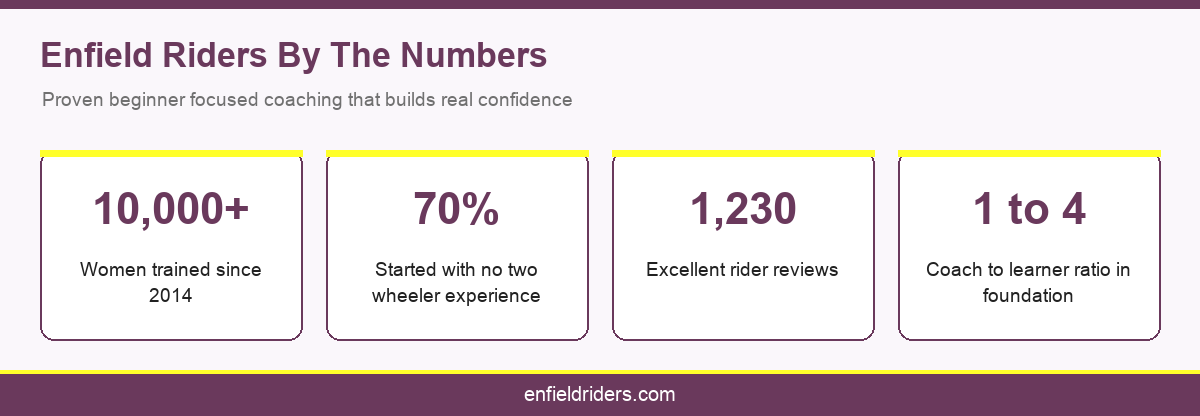
City traffic can feel overwhelming when you are new to riding. Horns, tight gaps, and fast lane changes make many beginners freeze. The good news is that confidence is a skill, not a personality trait. Structured bike riding classes teach you to read the road, stay calm, and place your motorcycle where it is safe. At Enfield Riders, we have trained more than 10,000 women since 2014, and around 70 percent had never ridden even a bicycle before. That means you do not need any background to start. This guide explains why traffic feels scary and how the right coaching turns nervous first timers into steady, aware riders.
Key Takeaways
- City traffic feels scary because of information overload, not because you lack talent, and structured practice fixes that.
- Reading the road early, holding safe lane position, and staying calm are learnable skills taught step by step.
- Beginner focused coaching with small groups builds real road confidence faster than practising alone.
Why city traffic feels intimidating
City traffic overwhelms new riders because so much happens at once. You track cars, buses, pedestrians, and sudden horns while also managing the motorcycle itself. On a Royal Enfield, that means the clutch, the gears, the throttle, and the brakes all at the same time. Your brain has limited attention. When every input feels urgent, it is normal to freeze or grip too tightly. This reaction is not a sign of weakness. It is simply a beginner whose skills have not yet become automatic.
Most of our learners arrive nervous, and many have never ridden even a bicycle. Around 70 percent start with zero two wheeler experience. That is why we never rush. We break every skill into small, calm steps so your brain can absorb one thing before adding the next. Once low speed control feels natural, traffic stops demanding all your focus. You free up attention to watch the road instead of fighting the machine. Good bike riding lessons build this foundation first. India also has clear road safety guidance from the Ministry of Road Transport, and understanding those basics helps too. When you know what to expect, busy streets feel far less chaotic and much more predictable to handle.
Reading traffic and anticipating risk
Confident riders are not braver than beginners. They simply see problems earlier. Reading traffic means scanning far ahead, not just at the vehicle in front of you. You watch for brake lights, indicators, and gaps that might close. You notice a pedestrian near the kerb or a car drifting without signalling. This early warning gives you time to slow down gently instead of braking hard at the last second. Anticipation turns sudden shocks into calm, planned responses.
We teach learners to build a simple habit of looking, thinking, and then acting. First you look wide and far. Then you ask what could go wrong here. Finally you adjust your speed or position before the risk arrives. This routine feels slow at first, but it becomes second nature with practice. In our advanced course, coaches work with just three learners at a time so you get close feedback on your scanning. Over 1,230 excellent reviews show how much steadier riders feel once they master this. You can read real experiences on our rider reviews page. Anticipation is the single biggest shift from a nervous beginner into a rider who moves through traffic with quiet, steady control every single day.
Positioning and lane discipline
Where you place your motorcycle in the lane matters more than most beginners realise. Good positioning keeps you visible to other drivers and gives you space to react. Sitting too close to the kerb traps you against parked cars and pedestrians. Sitting too central can put you in a car driver blind spot. The right position changes with the situation, and learning to choose it well is a core part of safe city riding. Position is your safety margin on wheels.
Lane discipline also means holding a steady line and not weaving through gaps. Weaving may feel faster, but it surprises other drivers and removes your escape routes. We coach learners to ride smoothly, signal early, and change lanes only with a clear plan. On a geared Royal Enfield, smooth clutch and throttle control lets you hold your line without lurching. Our foundation course spends real time on this at low speed before you ever face heavy traffic. If you want to start near you, our city foundation course pages show local batches and timings. Before you ride on public roads, remember a valid licence is required, and you can check the process on the Parivahan portal. Good positioning, practised early, becomes an instinct you carry for life.
Staying calm under pressure
Panic is the real danger in traffic, not the traffic itself. When a rider tenses up, the whole body stiffens. Stiff arms make steering jerky. A tight grip makes the throttle twitchy. Held breath raises stress and clouds decisions. Many small mistakes come from this chain reaction, not from a lack of skill. Learning to stay calm is therefore just as important as learning to brake or turn. Calm hands make a calm, controlled motorcycle.
We teach simple, practical ways to stay relaxed. Keep your shoulders loose. Breathe steadily. Look where you want to go, not at the thing you fear. These habits sound basic, but they change everything under pressure. Because so many of our learners are complete first timers, our coaches are trained to teach beginners gently, not just to ride well themselves. In our personalised one to one sessions, a coach works with only you, so nervous moments get immediate, patient support. This judgment free space lets confidence grow at your own pace. You can learn more about our approach on the about the academy page. With practice, calm becomes your default state, and traffic stops feeling like a threat you must survive each ride.
How coaching builds road confidence
Practising alone rarely builds steady confidence, because you cannot see your own mistakes. Structured coaching fixes that. A trained coach spots the habit you never noticed and corrects it before it sticks. Our foundation course runs 12 hours across two days, and the advanced course runs 8 hours across two days. Small groups keep attention high, with one coach to four learners in foundation and one to three in advanced. That close ratio means real feedback, not a crowd where you get lost. Structure turns random practice into steady progress.
Confidence also grows from doing hard things safely, one step at a time. We start you on a real geared Royal Enfield, teach the clutch friction zone properly, and only then add speed and traffic. A Royal Enfield is a motorcycle, not a gearless scooter, so mastering this from the official Royal Enfield machine builds skills that transfer anywhere. Because you learn correctly from the start, bad habits never form. Thousands of women have moved from nervous first timer to confident city rider through this exact path. Well structured bike riding classes give you skills, feedback, and a safe space to practise. That combination is what real road confidence is truly built on, ride after ride.
Conclusion
City traffic feels scary only until the right skills become automatic. With structured coaching, you learn to read the road, hold safe positions, and stay calm under pressure. You do not need any past experience to begin. Our beginner focused approach, small groups, and patient coaches have helped thousands of women ride with quiet confidence. A geared Royal Enfield, taught step by step, gives you skills that last a lifetime. When you feel ready to start your own journey from nervous first timer to steady city rider, book your place through our contact page. We would love to help you build lasting road confidence.
Frequently Asked Questions
No experience is needed at all. Around 70 percent of our learners had never ridden even a bicycle before. We teach every skill step by step, starting with low speed control on a real Royal Enfield motorcycle.
The foundation course runs 12 hours across two days. This gives you enough time to learn the clutch friction zone, gears, braking, and low speed control calmly before you build up to riding in busy traffic.
A Royal Enfield is a geared motorcycle, not a gearless scooter, so it needs clutch and gear skills. We teach these properly from the start, which makes traffic riding feel steady and controlled once mastered.
Foundation classes keep one coach to four learners, advanced classes one to three, and personalised sessions are fully one to one. Small groups mean close feedback, so nervous first timers get patient, individual attention throughout.
Yes. Most nerves come from information overload, not lack of talent. Coaching makes control automatic, freeing your attention to read the road. You can see how learners felt on our rider reviews page.
Yes. We run a women first coaching academy and have trained more than 10,000 women since 2014. Our judgment free space lets women learn at their own pace with coaches trained to teach beginners gently.
We run local batches in several Indian cities. For example, you can view timings and details for our Pune foundation course or Bangalore foundation course to find a batch that suits you.
You need a valid licence to ride on public roads. You can check the process on the official Parivahan portal. Our classes teach safe riding skills on training grounds while you sort out your licence.
The foundation course, 12 hours over two days, builds core control for first timers. The advanced course, 8 hours over two days, refines traffic reading, positioning, and confidence with a smaller one to three coaching ratio.
Confidence grows with structured practice, not overnight. Many riders feel far steadier by the end of their course. Learning correct habits early prevents bad ones forming, so your road confidence keeps building with every ride.
by
Tags: